From Bike Shop to Bay: An intern’s journey into aquaculture

When Aydan Craveiro's high school shop teacher sent an email about a job opportunity, he couldn't have imagined where it would lead. The position — a shellfish aquaculture internship on Cape Cod — offered everything he was looking for: outdoor work, housing, and a chance to escape the basement of the bike shop where he'd spent two years as a mechanic.
"I was pretty much done being locked in the basement all day," Aydan recalls. The internship would give him something he hadn't experienced in his previous work: variety and fresh air.
The three-week Massachusetts Sea Grant Aquaculture training rotation in 2024 introduced Aydan to the full spectrum of shellfish aquaculture. He spent time at a hatchery, worked at Scorton Creek farm, visited operations in Martha's Vineyard, and even returned to his hometown of Rowley. "Every place I went was really different," he says. "I got to see every different step between every different way we could have worked in the field."
At the hatchery, Aydan witnessed the earliest stages of shellfish life. At the farms, he learned harvesting techniques. Each rotation offered a distinct perspective on the 18-month journey from hatchery to legal-size oyster or quahog. "Having been in the hatchery, I got to see what went into getting oyster seed before they got here," he explains.
The hands-on training didn't go unnoticed. "Everybody who got to work with Aydan during his rotations wanted him on their farm," says Abigail Archer, a Sea Grant fisheries and aquaculture specialist and one of the program coordinators. "Everybody recognized that he had a special skill."
When it came time to choose his placement, Aydan selected the Town of Barnstable's shellfish propagation program under supervisor Liz Lewis. The deciding factor? Variety. "We do something different pretty much every day," Aydan notes.

Liz saw Aydan's potential immediately. "I had him for 10 minutes," she recalls. "Aydan almost read my mind and picked up what I needed. This kid had one week of training, and he already could anticipate my needs."
What sets Aydan apart isn't formal aquaculture training—he had only touched on the subject briefly in tech school. Instead, it's his problem-solving ability, honed during those years at the bike shop. "I used a lot of problem solving for that stuff," he says of his mechanical work.
That creative thinking proved crucial when Liz tasked him with solving a critical problem. The town's floating upweller system was experiencing significant mortality among one-millimeter quahogs. The tiny shellfish were getting trapped on edges rather than sitting properly on screens.
Aydan, working with two other seasonal employees, redesigned the system to include a lip that forced the quahogs onto the screens. "We weren't seeing any death," Liz says. "None from that problem. It's completely solved." With 500,000 quahogs per tray and the town growing 4 million this year, even small percentages translate to significant losses—losses that Aydan's innovation eliminated.
The internship has also pushed Aydan into unexpected roles. He now teaches volunteers—many older than him and from diverse backgrounds including former surgeons and tech executives—how to plant clams and build predator exclusion nets. "It's definitely a learning curve," he admits, "but getting used to it pretty quick."
For Liz, the Sea Grant aquaculture internship program offers something traditional hiring cannot. "The cool thing about the internship is they don't have to have any experience in the field," she explains. "He worked at a bike shop, so he's good with people. And he has that mechanical brain. There's so much value in that. "
The value extends beyond job skills. In Barnstable, shellfish harvesting represents tradition and community. With nearly 3,000 residents holding licenses, opening day draws hundreds of people to the landings. "It's a party," Liz says. "You should see opening day—the town TV comes out and films it."
As Aydan's internship drew to a close, Liz made her wishes clear: she wanted him back. Her "dream," she told colleagues, is eventually offering Aydan a permanent nine-month position, allowing him "to be his vagabond self for a few months out of the year" while maintaining a core role on her team.
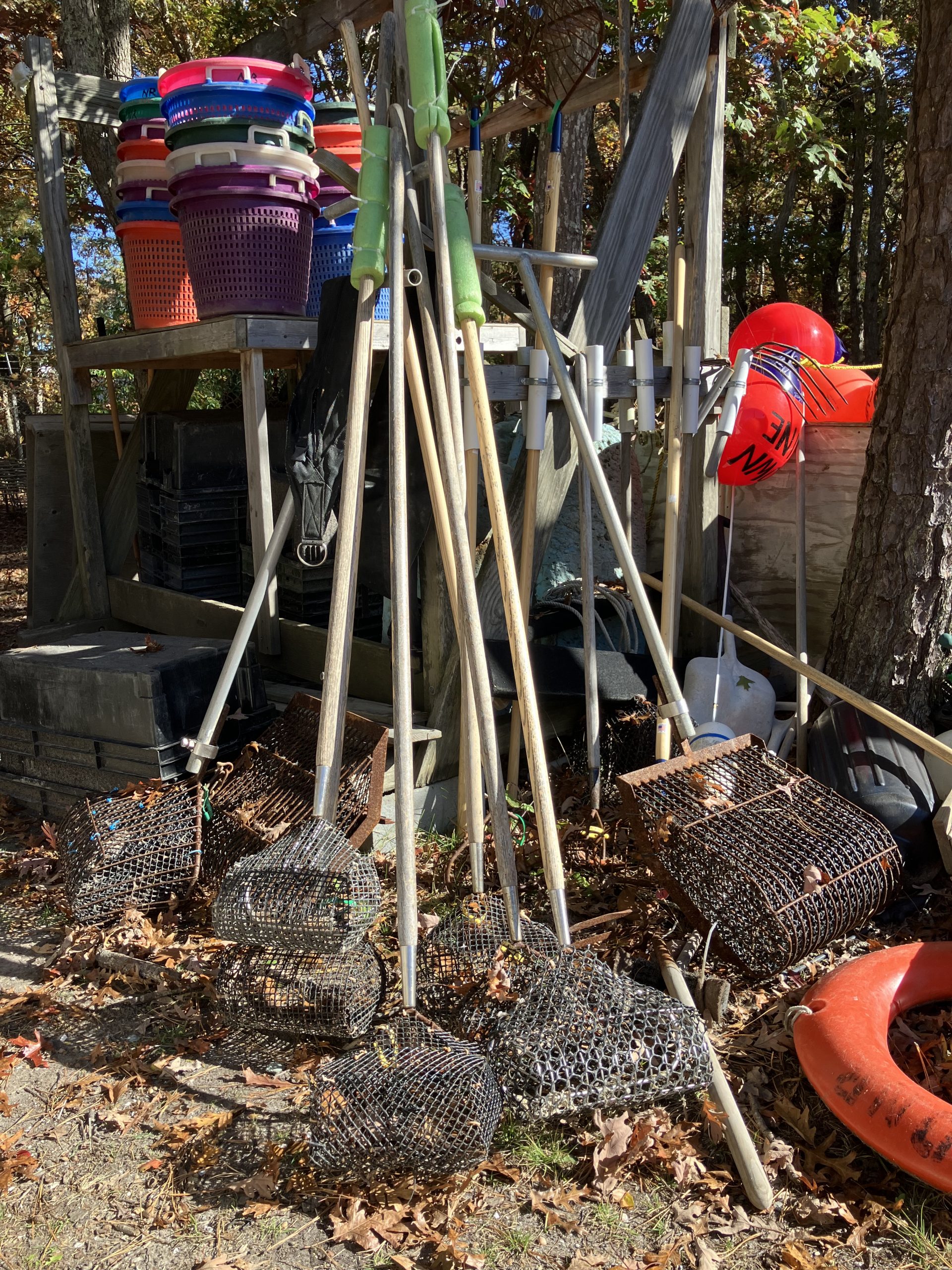
"It's not easy to find at this point," Liz says of workers like Aydan. "You've got to keep them."
Aydan came back as a seasonal staff person in 2025 and worked with Liz again. He’s been working for a ski mountain during the winter.
Aydan continues to embrace the variety that drew him to the position. Whether he's shoveling oysters from boats, teaching volunteers, or solving the next engineering challenge, he knows one thing for certain: "Being outside every day again" beats the basement any day.
- February 2026