Cape Cod Towns Lead the Way on Sea Level Rise Planning

With help from WHOI Sea Grant’s floodplain specialist, three Cape Cod towns are pioneering new approaches to coastal flooding as sea level rise threatens to expand flood zones far beyond their current boundaries. Through a groundbreaking project in association with the Pleasant Bay Alliance, the towns of Orleans, Chatham, and Harwich are working to adopt comprehensive regulations that protect not just against today's flooding risks, but tomorrow's as well.
The initiative builds on years of work developing model bylaws and regulations for coastal resilience. What makes this effort unique is its forward-looking approach. "We have to look at not only the current floodplain, but also the future floodplain," explains Shannon Hulst, the floodplain specialist with WHOI Sea Grant and Cape Cod Cooperative Extension. Over the past few years, Shannon has worked with the Cape Cod Commission to develop three sets of model regulations as well as outreach products to communicate the regulations and the science behind them, including a map viewer. "With sea level rise, we expect the floodplain to expand in the future, so we're trying to get ahead of that and be realistic about flood risk."

The regulations take multiple approaches to flood risk. In existing high-risk flood zones, they propose restrictions on new development and expansions. New construction in areas expected to enter the floodplain by 2050 or 2070 would be required to follow building code elevation standards for adjacent flood zones and ensure that development doesn't redirect floodwaters onto neighboring properties.
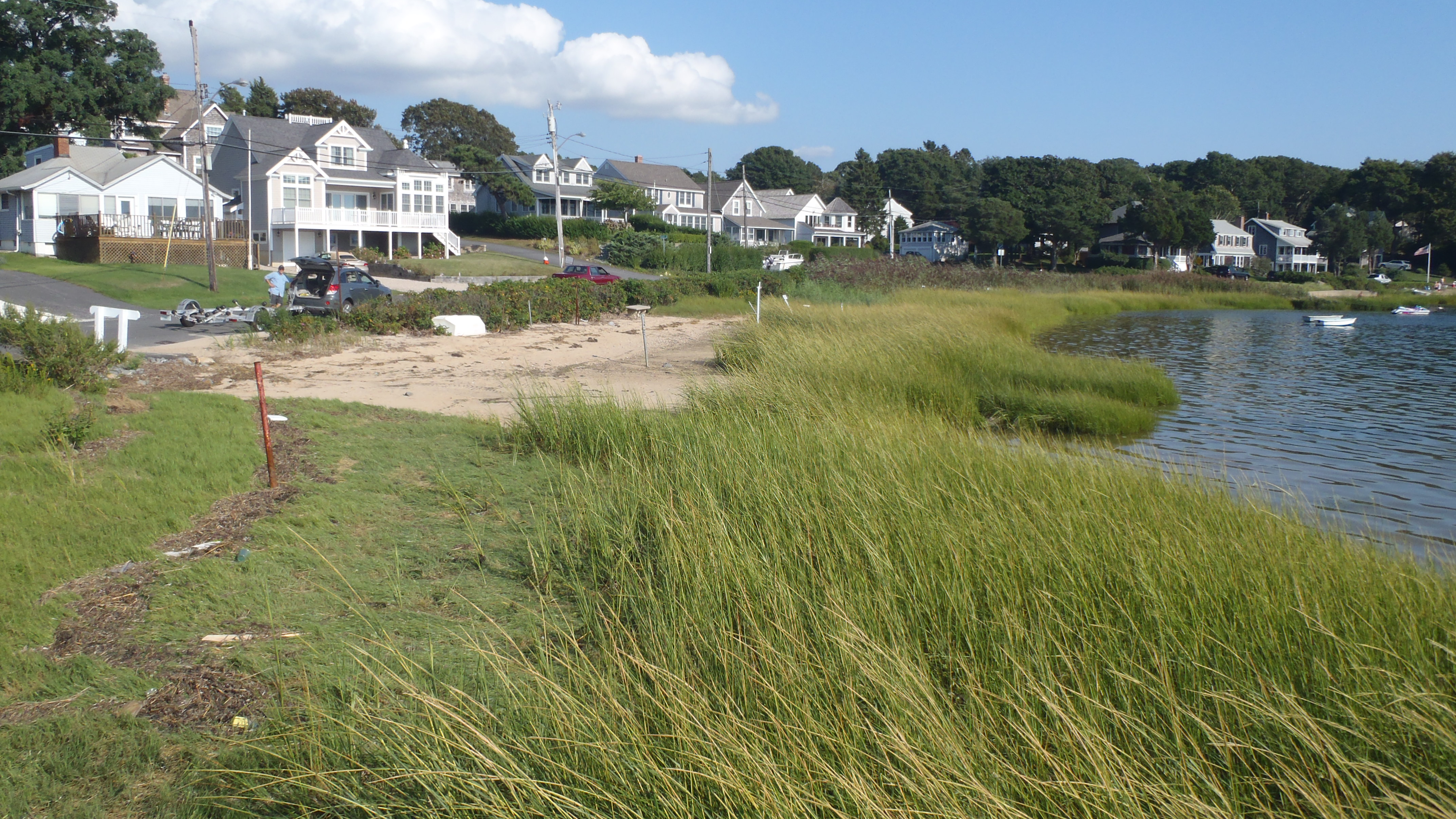
The regulations also include an innovative approach to wetland migration. Special transition areas would keep land behind wetlands free of development, allowing these natural buffers to move inland as sea levels rise—a critical feature for long-term coastal ecosystem health.
The regulations are the product of extensive collaboration between local governments, the Cape Cod Commission, WHOI Sea Grant and Cape Cod Cooperative Extension. They include three main components: wetlands bylaws, zoning regulations, and performance standards that work together to address coastal flooding comprehensively.
At a kickoff meeting in late January 2026 at the Chatham Community Center, representatives from conservation commissions, planning boards, and municipal staff learned how they can tailor the model regulations to their communities' specific needs. The approach is intentionally flexible. "It's basically an à la carte option set," Shannon notes. "Pieces of it might not make sense for all towns, like some towns are more developed than others."
Funded through September by the Southeast New England Program, the project aims to have customized regulations ready for each town by spring, with public outreach over the summer and potential adoption of bylaws at spring 2027 town meetings.
"If towns adopt the bulk of these regulations, Cape Cod will be much better prepared for sea level rise and will be on the leading edge of community adaptation," Shannon reflects. "That’s amazing to have right here on Cape Cod."