
Focusing on the Fundamentals of Shellfish Farming

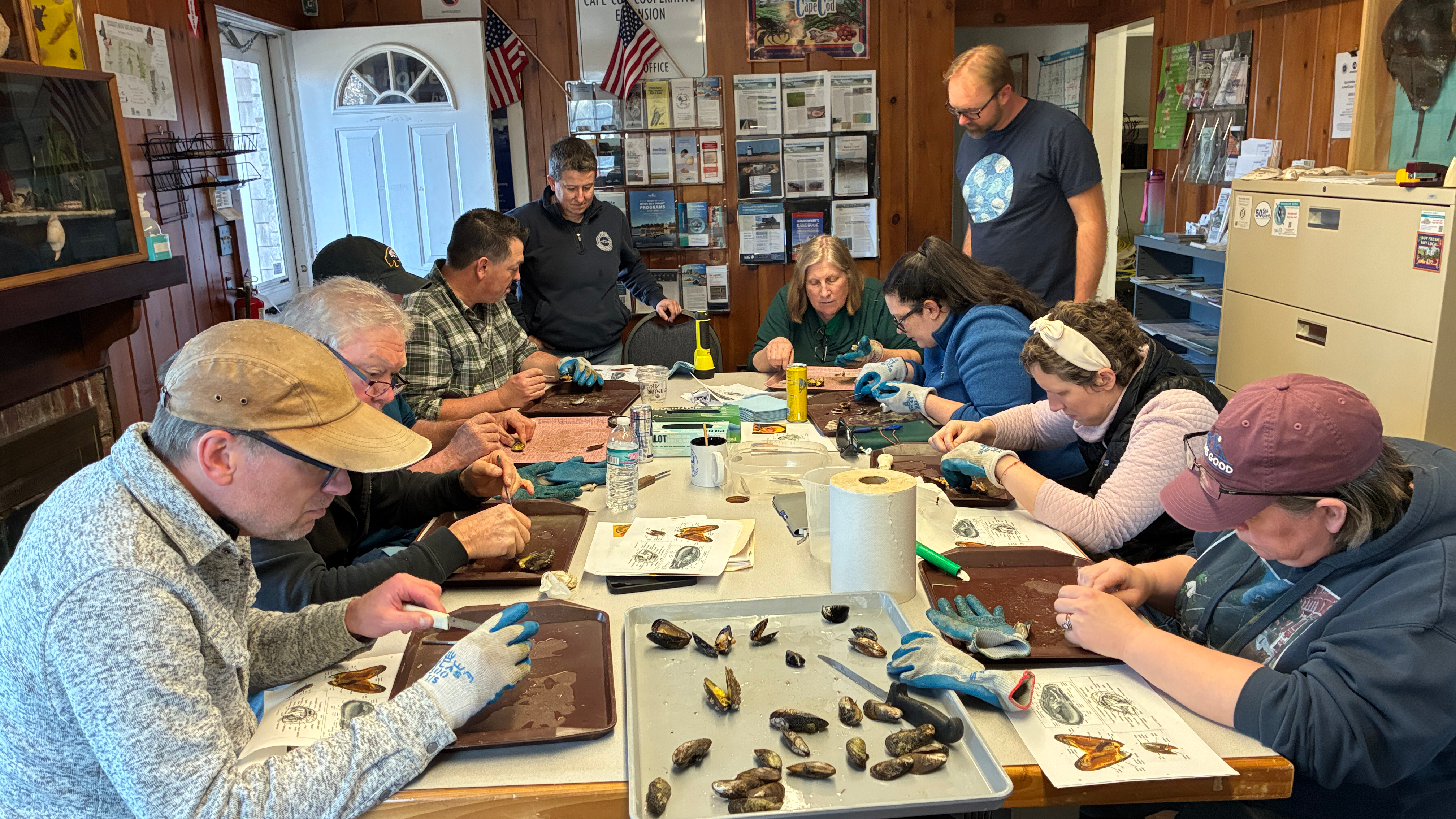
The 2026 Fundamentals of Shellfish Farming (FOSF) class wrapped up in April with 28 freshly minted graduates from the course.
The economic incentive to enter the aquaculture industry brings a steady influx of inquiries to WHOI Sea Grant for technical and permitting assistance. The FOSF class is designed to give people an overview of all the different ways someone could get involved with shellfish farming including creating a new farm and going through permitting, signing up for waitlists for existing permitted acreage, or working on a farm as staff.
This year's students learned the basics of growing oysters and quahogs, how to protect shellfish from predators and pests, how to harvest the crop safely, and what agencies are involved with permitting and regulation of shellfish farming. Eight of the ten classes were held remotely, making the course more accessible for the students who came from seven different towns on Cape Cod and seven towns in other parts of Massachusetts. Two classes were held in person in Barnstable so that students could learn about shellfish anatomy through dissection and had the opportunity to put their hands on many different types of oyster-growing gear.
Attending weekly classes over ten weeks is a big commitment. The in-depth nature of the class helps prospective shellfish farmers understanding the joys and the hardships of aquaculture. Some students ultimately decide shellfish farming is not for them -- "which is still a win," says WHOI Sea Grant Fisheries and Aquaculture Specialist Abigail Archer. "If we can help someone see this is not a path for them, that's great because it saves them time and energy and possibly money. Many students do go on to work on existing shellfish farms, volunteer with town shellfish departments, and some start their own farms." Students graduate from the class with a clear-eyed sense of what shellfish farming takes, and the knowledge that there is help available if they have questions or just need some guidance.
Anyone interested in learning about the 2027 class should email rachel.hutchinson@capecod.gov.