Shellfish Farming on Cape Cod
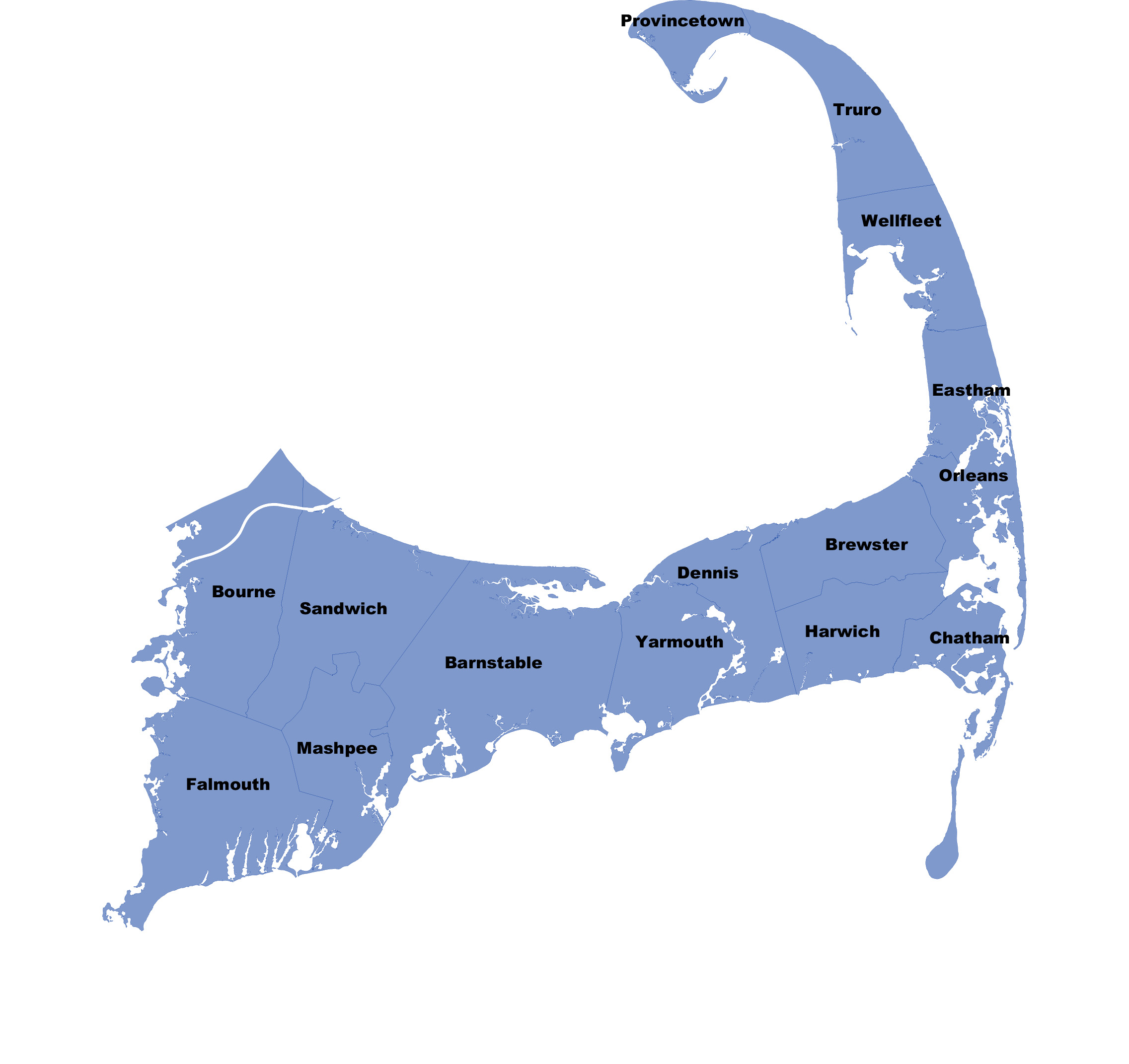
Do you have questions about shellfish farming in your town?
Find more information in the town links below or click the information icon in the map to find your town's website!
Cape Cod Town Shellfish Departments
Shellfish farming is a big part of Cape Cod’s working waterfront
Shellfish farming = aquaculture! It’s real farming, creates local jobs, and supports coastal businesses.
In Massachusetts, oysters (Crassostrea virginica) and quahogs (Mercenaria mercenaria) (also known as hard shell clams) are the main species grown.
People have been farming shellfish for thousands of years worldwide.
The quahogs and oysters being grown today are the same species Native Americans harvested as a protein source long before shellfish aquaculture techniques were developed.
In Massachusetts, oysters are the #3 most valuable seafood—after scallops and lobsters.
How It Works
All shellfish start tiny—larvae in the wild or in hatcheries—before growing into “seed” that farmers plant.
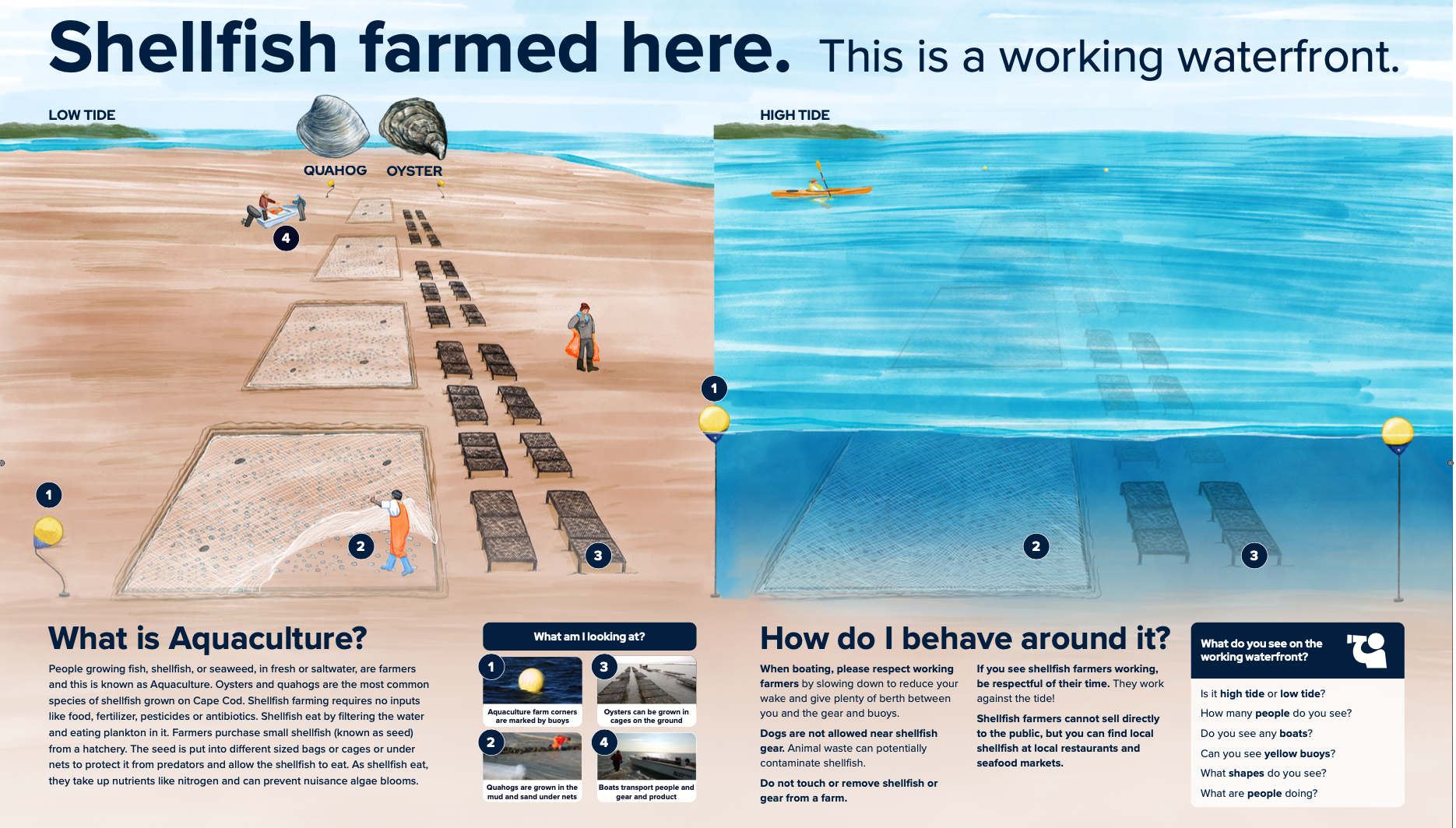
Farmers buy ‘seed’ from hatcheries and raise it in protective gear. No feed, fertilizer, or antibiotics needed!!
Oysters grow on or above the seafloor; quahogs bury themselves in sand and mud.
Oysters and clams breathe oxygen and release CO₂—just like us!
Predators like crabs, fish, and birds love to eat shellfish too—farmers have to outsmart them and protect their crop.
Farmers work with the tides—spot them on the flats at low tide or on boats at high tide.
Spot farm gear at low tide? That’s a working waterfront. Give it space.
Farms are usually marked by yellow buoys—those show the boundaries of the licensed town plots. Please avoid walking through gear or moving buoys.
Growing takes time: 1–3 years for oysters, 3+ years for quahogs of different sizes.
Most farms are tucked in bays and estuaries—close to shore where waters are relatively calm.
Clean waters = safe shellfish products. The Commonwealth of Massachusetts and the individual towns spend time and effort protecting and testing waters to keep shellfish areas open for harvest.
 Benefits of Shellfish Farming
Shellfish eat by filtering water, sipping up tiny plants called phytoplankton.
Bonus: while eating, shellfish remove nitrogen and help stop nuisance algae blooms.
Farm gear doubles as habitat for fish, crabs, and other bay creatures.
Shellfish aquaculture = big business. In 2024, Mass. farms grew 58.3 million oysters and clams worth $32.8M!
Eating & Enjoying Shellfish
In Massachusetts, most shellfish farmers are not allowed to sell directly to you from the farm, but you’ll find their oysters and clams at local restaurants and markets. You can ask the farmer what restaurants and seafood shops carry their products.
All shellfish harvested; either by aquaculture farmers or wild commercial harvesters follow strict rules to make sure they are sustainably harvested and help support wild populations.
Ask your server or fish market where your shellfish comes from. Many are grown right here on Cape Cod.
Many town shellfish departments also run shellfish farms that support commercial and recreational shellfishing programs – if you buy a license through the town, you can go harvest quahogs and oysters yourself from approved areas during certain seasons.
Interested in harvesting your own? Check with your town shellfish department about getting a recreational shellfishing license.
If harvesting shellfish yourself as part of a recreational shellfishing program – follow guidelines for safe harvest.
Shellfish are nutritious, lean, and packed with protein.
You can eat shellfish raw, cooked, grilled, or baked. Follow guidelines for safe handling, storage and cooking.
Resources
- Visit our Aquaculture & Fisheries page to find brochures and other resources related to safe shellfish handling, recreational shellfish harvesting, and more.
- Learn the fundamentals of shellfish farming in our 10-week course.
- Find more related resources
- Mass. Division of Marine Fisheries
- Buy Fresh, Buy Local 2025 guide to finding fresh fish and produce raised on Cape Cod