Ocean Floor to Ice Core: Using Earth’s archives to unravel ancient ice sheet mysteries
Presenters
Danielle LeBlanc, Woods Hole Oceanographic Institution, Geology & Geophysics
Kaden Martin, Woods Hole Oceanographic Institution, Geology & Geophysics
Date & Time: June 5, 2026, 9 a.m. to 4 p.m.
Location: Carriage House, Quissett Campus, Woods Hole Oceanographic Institution
Abstract
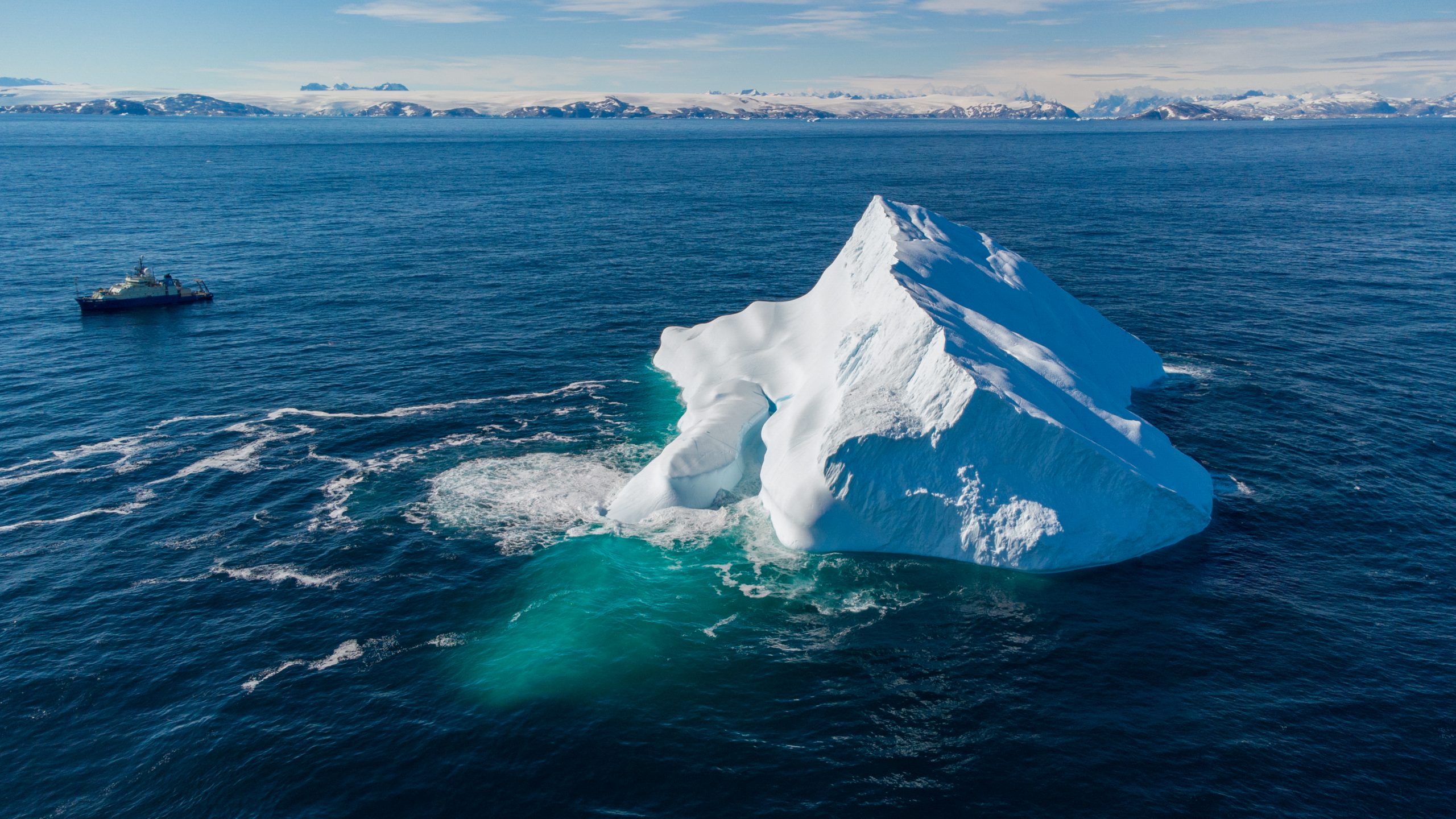
During the last ice age, several mysterious events occurred that disrupted the large ice sheet over North America. These events, also known as Heinrich events, released “armadas” of icebergs into the North Atlantic ocean and coincide with changes in ocean circulation, precipitation, and ocean chemistry. While Heinrich events have been studied by scientists for decades, the full story of how they occurred and the total extent of their impacts remains unclear.
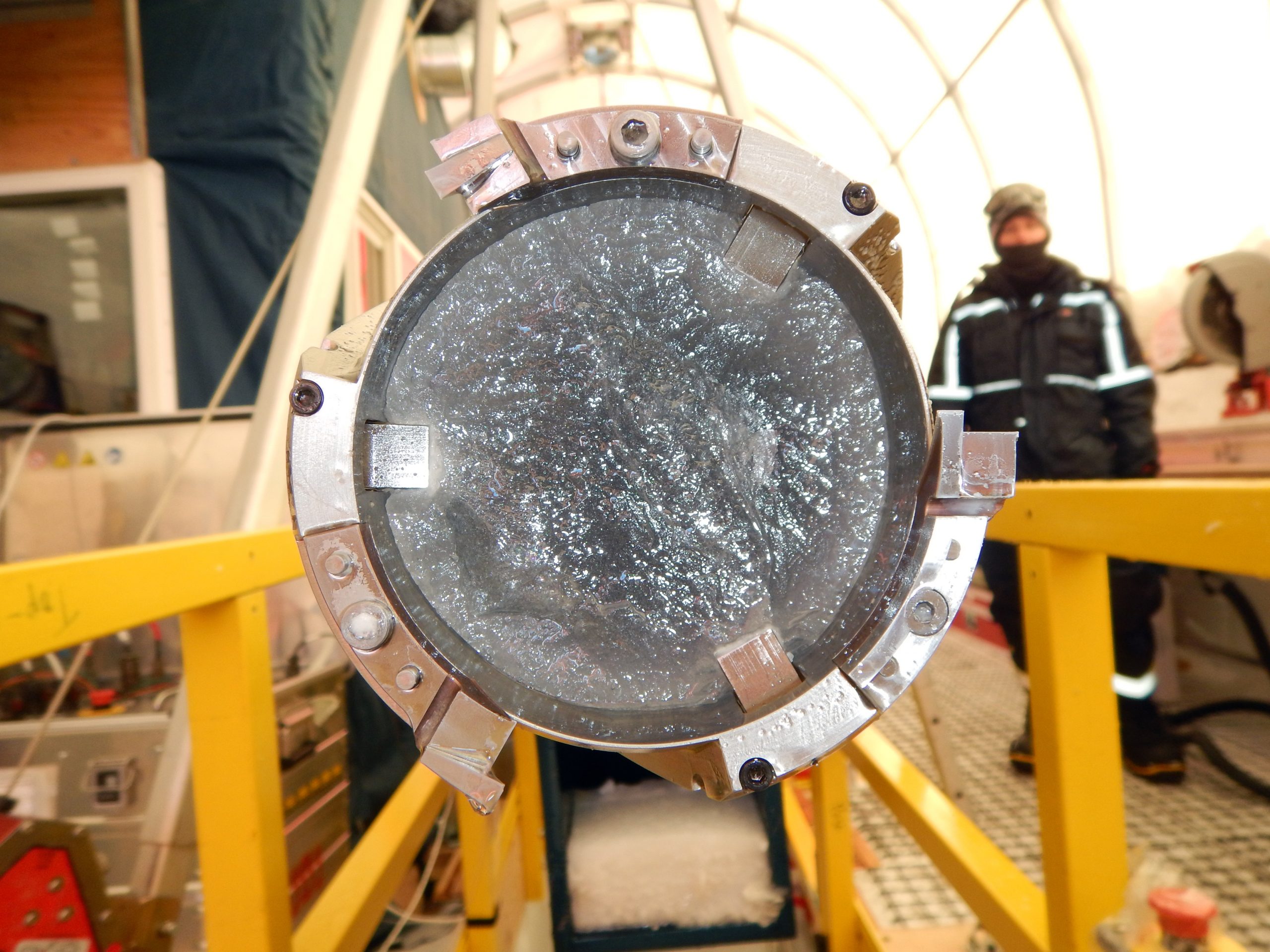
Ice core. Credit: TJ Fudge
This workshop will discuss how we can use evidence from Earth’s natural archives to unravel these mysterious events. Ice cores and ocean sediments contain stories much like a history book. Each ice bubble contains gases from Earth’s past atmosphere, providing insight into prior atmospheric conditions. Each sediment layer contains rock fragments delivered by icebergs, which can be traced back to their source ice sheet like puzzle pieces. It is the job of paleoclimate scientists like Danielle and Kaden to study these natural clues and reveal past ice sheet changes.
For this workshop, Danielle and Kaden will provide insight into the cutting edge methods paleoclimate scientists are using to improve our understanding of Heinrich events and their connection to other global changes.This workshop will show an ongoing artificial iceberg experiment at our David Center for Innovation and include a hands-on demonstration with homemade classroom sized icebergs to test in smaller tanks and interpret observations. Additionally, teachers will have the opportunity to tour the ice and sediment core lab facilities at WHOI to learn firsthand how sediments and ice can tell ancient stories.
Next Generation Science Standards Connections:
MS-ESS1-4 Earth's Place in the Universe
Construct a scientific explanation based on evidence from rock strata for how the geologic time scale is used to organize Earth's 4.6-billion-year-old history.
Construct an explanation based on evidence for how geoscience processes have changed Earth's surface at varying time and spatial scales.
Analyze and interpret data on the distribution of fossils and rocks, continental shapes, and seafloor structures to provide evidence of the past plate motions.
MS-ESS3-3 Earth and Human Activity
Apply scientific principles to design a method for monitoring and minimizing a human impact on the environment.*
Analyze geoscience data to make the claim that one change to Earth’s surface can create feedbacks that cause changes to other Earth systems.
Workshop Agenda
Friday, June 5, 2026
8:45 – 9:15 -- Arrive WHOI Carriage House. Breakfast: pastries, coffee, juice, tea, water
9:15 – 9:30 --Introduction to WHOI and WHOI Sea Grant
9:30 – 10:30 -- Danielle LeBlanc
10:30 – 10:45 -- Break
10:45 – 11:45 --Kaden Martin
11:45 – 1:00 -- LUNCH. Lesson plans, standards, and classroom integration discussion.
1:00 – 1:15 -- Split into 2 groups and proceed to afternoon sessions
1:15 – 2:15 -- Group 1 - Tour of ice and sediment core lab facilitites. Group 2 - hands-on classroom activities. Observe artificial iceberg experiment at the WHOI David Center for Innovation and test homemade classroom-sized icebergs in smaller tanks.
2:15 – 2:30 -- Groups swap locations
2:30 – 3:30 -- Repeat of activities
3:30 - 4:00 -- Hand out PDPs and take survey
Contact
Grace Simpkins
gsimpkins@whoi.edu