Layer by Layer: Building a sense of myself in science

By Kyra Jisoo Lee
2025 O-STEAM Fellow
I stood in WHOI's Seafloor Samples Lab, a massive library filled with rows and rows of mud and rock collected from the bottom of the ocean, looking down at a sediment core on the table in front of me. I opened the core, carefully slicing it as my hands pressed into the cool, compacted dirt and sand, revealing layers that had taken decades, sometimes centuries, to form. Each band of color told a different story of time, pressure, and change. As I traced the lines with my finger, I realized I was falling in love with something entirely new: not just sciences, but the idea that growth happens slowly, layer by layer, often unnoticed until you look closely.
That sediment core became the lens through which I understood my week at the Ocean STEAM Powered Fellowship (O-STEAM) at the Woods Hole Oceanographic Institution. Like the core itself, my experience was built in layers, each day depositing something new that shaped who I was by the end of the week.
As the week deepened, so did the layers. On Monday and Tuesday, we stepped onto the water, learning about oceanographic sampling techniques on the Zephyr. Holding sea urchins, crabs, and starfish brought me back to my childhood, visiting beaches and aquariums, where my first hands-on encounters with ocean life felt magical. That night, as we listened to the recorded sounds of dolphins and learned to identify their signature sounds, the ocean transformed from something I could see into something I could sense. These layers were dynamic, shaped by motion, sound, and awe.
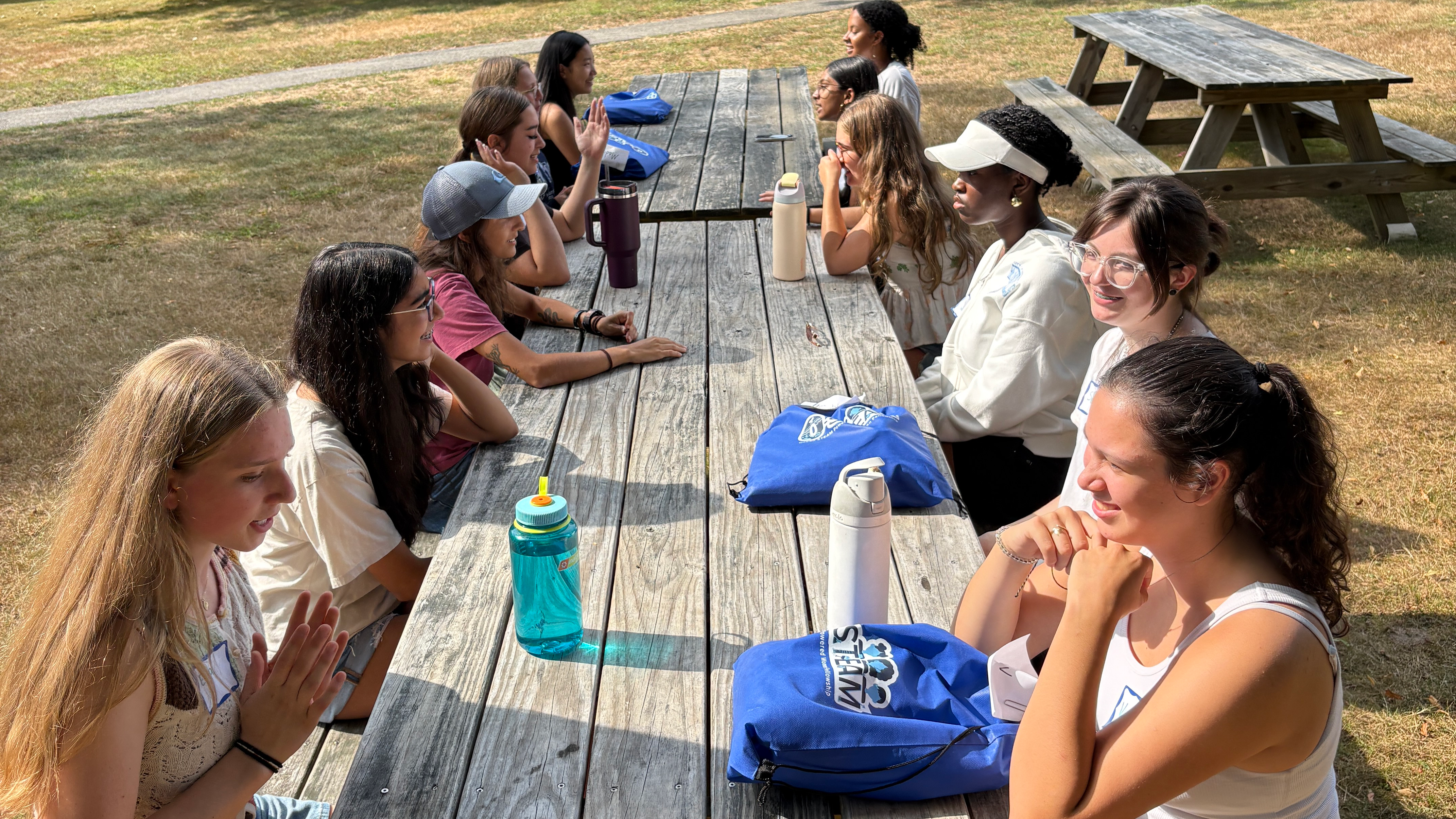
The surface layer formed on the first day, when I, along with a cohort of nine other fellows, moved into the dorm that would be home for the next week. I remember my two-hour drive to the Cape, feeling nervous, excited, scared, all at the same time. We introduced ourselves through icebreakers and prepared meals together, slowly getting to know each other. This layer was light but essential, creating bonds and connecting with a new community. And after dinner, a session on learning how to communicate ocean science laid the foundation for everything that followed. Just as surface sediments are shaped by their environment, this first layer was shaped by my curiosity and openness.

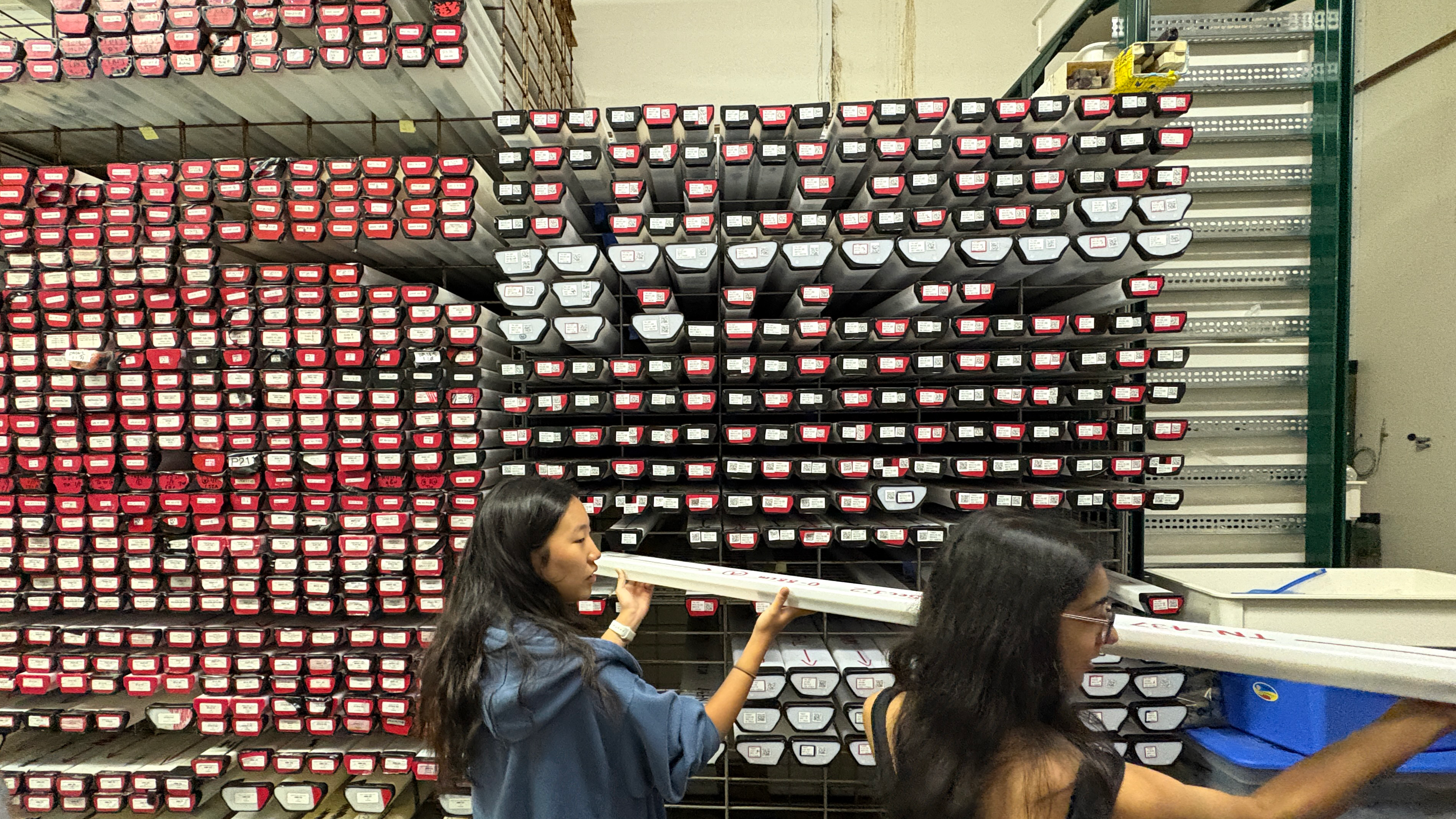
Midweek brought compression, the kind that transforms loose sediment into something lasting. On Wednesday, after we split open the sediment cores and traced their quiet history, we slid our cores into the racks alongside other research cores, and I saw my core had its place among other recorded layers of marine geology. Handling real samples, analyzing data, and recording it felt challenging yet exhilarating. Growing up with hands-on, progressive learning, this experience felt natural to me, and it quickly became one of my favorite days at Woods Hole. That feeling further deepened as, over dinner with undergraduate and graduate STEAM students, I listened to stories that bent and diverged in unexpected directions. No paths looked the same, yet each led meaningfully forward. Like sediment settling under pressure, the lesson crystallized slowly but firmly: growth is not linear, and the most transformative moments come from stepping boldly into the unknown. This layer, compressed by challenge and conversation, became dense with possibility and perspective.
The deepest layer of complexity came with Thursday and Friday’s adventures. Studying phytoplankton and physical oceanography showed me how the smallest organisms and invisible currents drive global systems. I began to understand science as a system of interconnected forces rather than isolated facts. We deployed hydrophones while kayaking, listening to the underwater soundscape, and collecting data. Balancing fieldwork with analysis made the ocean feel more alive, a dynamic system that can be measured, interpreted, and deeply felt all at once.


When a sediment core is pulled from the ocean floor, it doesn’t reveal change through a single dramatic moment, but through accumulation. Looking back, my week at Woods Hole was the same. Each experience, whether exploring labs, searching for whales, cooking meals with peers, or presenting my five-minute “who I am” story, settled into me quietly. Together, they formed something solid.
I arrived curious. I left layered with confidence, perspective, and a deeper connection to the ocean. Like a sediment core, my growth may not be immediately visible, but it is there, holding the story of a week that reshaped how I see science, community, and myself.
- February 2026