Sunken Ships, Living Habitats: Removing marine debris from historic wrecks

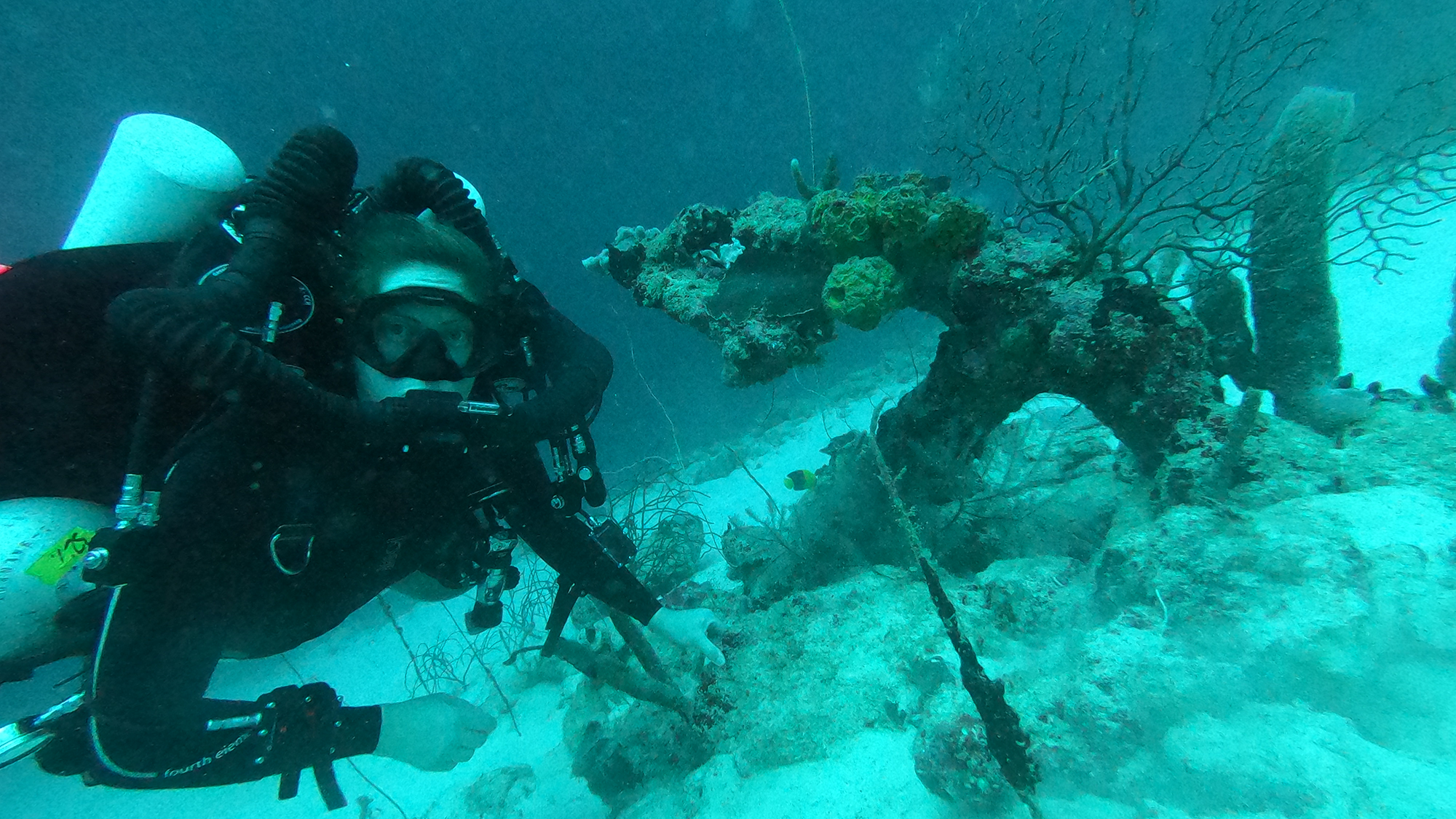
Kirstin Meyer-Kaiser is a biologist at WHOI who studies early life-history stages of invertebrates, including where they go in their larval stages and where the larvae settle. Her work has taken her to habitats all over the globe, sometimes using SCUBA and small boats to reach near-shore habitats and at other times using large oceanographic research ships equipped with remotely operated vehicles to sample off-shore or deep-sea habitats.
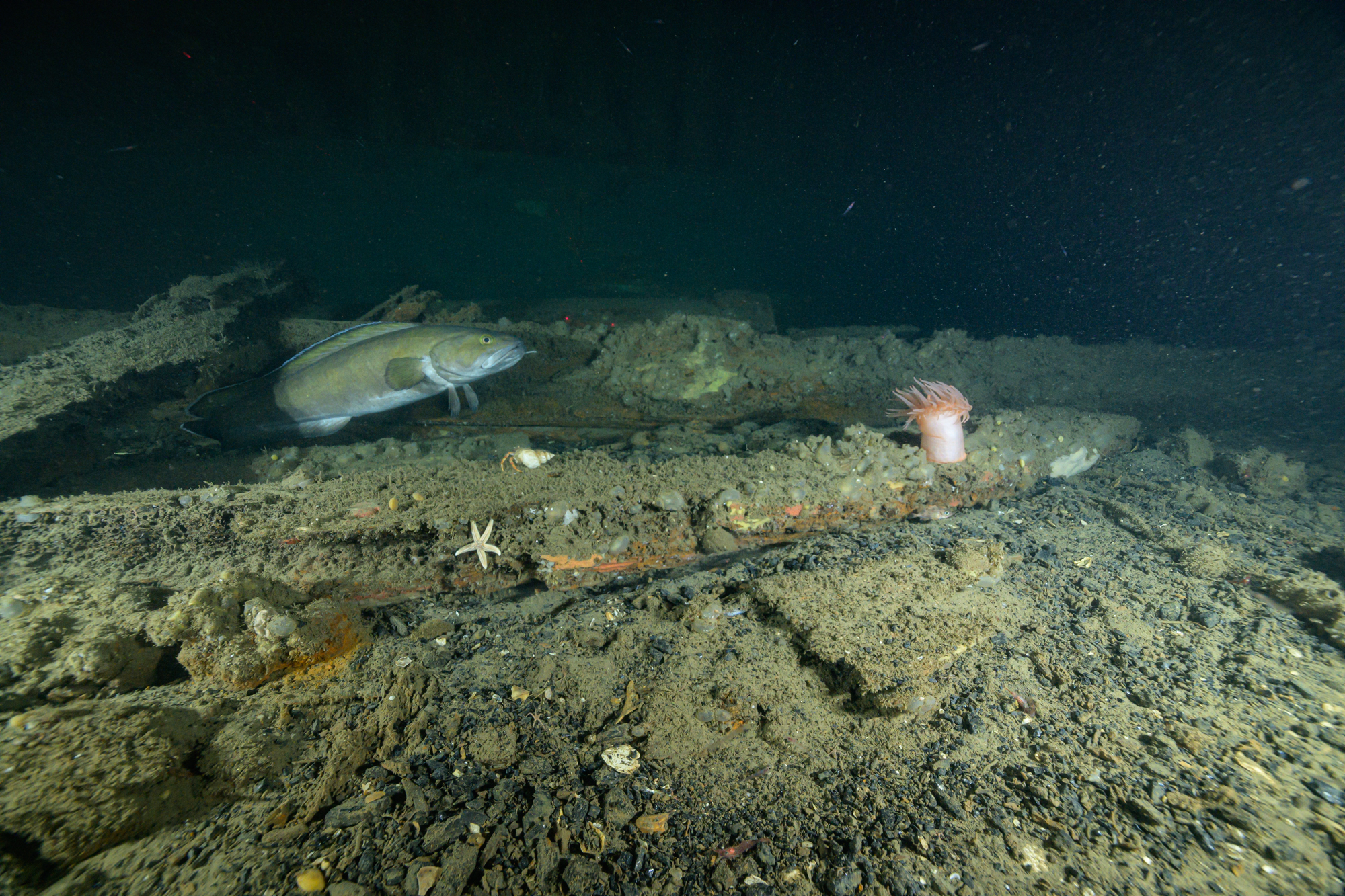
“Most of the ocean floor is blanketed by soft sediments, so any solid object – a reef or a lone rock or a sunken ship – will inevitably be colonized by sponges, anemones, crabs, mussels, and fish,” said Meyer-Kaiser.
Over the last decade and a half, Meyer-Kaiser has been studying the colonies that settle around shipwrecks, especially wrecks with historic importance, looking at changes to the colonies over time as well as changes to the ship, from wood-boring worms to the impacts of large fishing nets and other gear that become entangled in the wreck. This “marine debris” can destroy whole sections of a wreck, with the ripple effect of disrupting the habitat of colonizing animals.
Meyer-Kaiser’s interest in maritime heritage ecology took on new meaning when the National Sea Grant Office issued a call for proposals for removing and preventing marine debris. While fishing gear is commonly collected in marine pollution clean ups, few people would associate the gear with negative impacts to shipwrecks.
“Shipwrecks are hotspots of biodiversity, providing habitats for many different species of marine animals,” said Meyer-Kaiser. “Lost or abandoned “ghost” gear can devastate the biological community living on and around it and destroy sections of historically-important ships, so preserving them is important.”
Through her funded project, Meyer-Kaiser and WHOI marine archaeologist Calvin Mires are working with fishermen to understand the factors that cause marine debris entanglements on shipwrecks and are crafting a series of recommendations to prevent future entanglements.
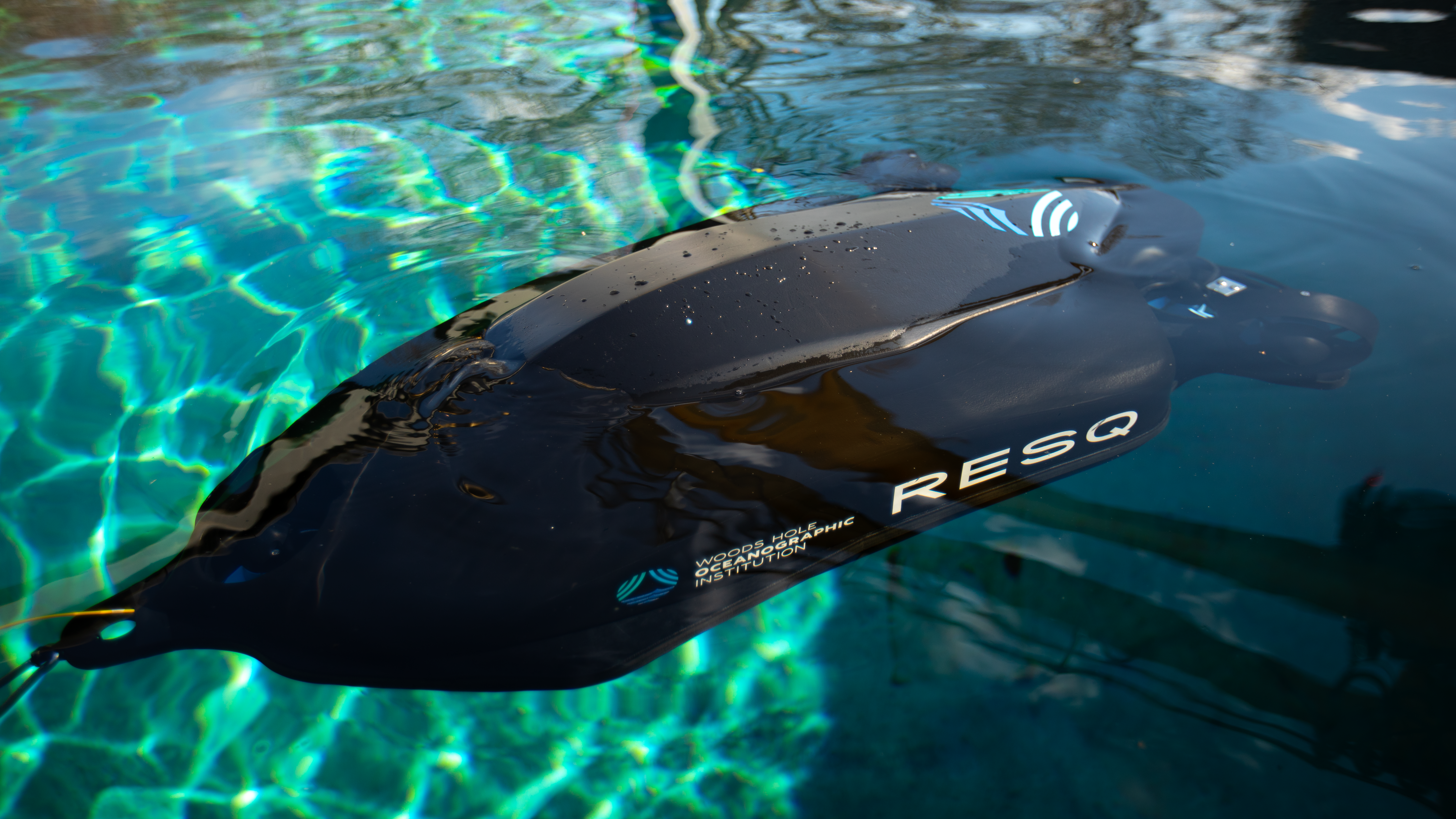
With WHOI Sr. Engineer Robin Littlefield, the project team has developed a low-cost remotely-operated vehicle called ResQ that is specifically tailored to the challenge of removing marine debris from complex shipwreck environments, with the future aim of enabling non-profits or fishermen to undertake gear recoveries.
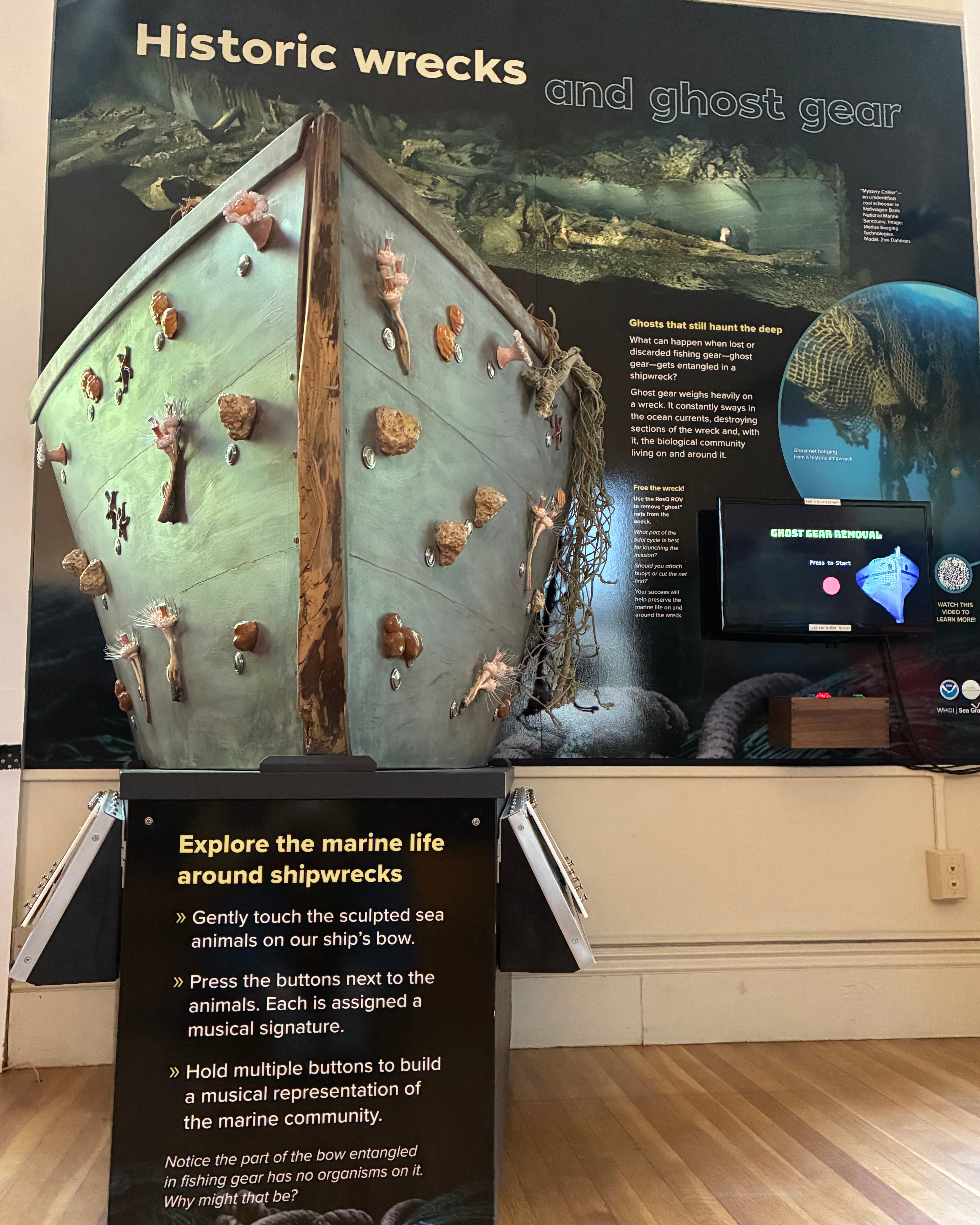
Engaging the public is an important part of the project. Meyer-Kaiser’s team partnered with Sound Explorations, a non-profit organization that uses music and multi-modal learning to teach scientific concepts, to develop a museum exhibit about the impact of marine debris on wrecks and the communities around them. The exhibit puts accessibility in the forefront.
“Marine science education often places a high reliance on visual modes of representations,” said Terry Wolkowicz the exhibit designer and education specialist with Sound Explorations. “Through this exhibit, touch and music rise to take a starring role to communicate important marine science and stewardship concepts.”
The exhibit shows how shipwrecks support biodiversity and how marine debris entanglements damage both biodiversity and maritime heritage. Using sound and touch, it allows for full participation of blind and low-vision individuals in this educational experience. The exhibit includes sculpted (i.e., touchable) organisms on a model shipwreck with associated sensors that play musical motifs representing the different organisms that colonize shipwrecks. Visitors are invited to play a video game to plan their own debris removal mission, determining when to launch their ROV and how best to remove entangled nets.
The exhibit is installed through 2026 at the WHOI Discovery Center at 14 School Street in Woods Hole village.
You can learn more and hear the organisms's musical motifs on the WHOI Sea Grant website.