
Post 1: A New Start – Tracking Fall Currents


We had beautiful weather for our first deployment of the 2026 O-STEAM drifters this Sunday (10/25/26)! Thank you to the crew of the R/V Tioga for deploying the drifters for us!
The three drifters released this week are part of the 10 drifters built this summer by high school students participating in the 2026 O-STEAM fellowship. It was a lot of fun meeting the fellows and talking to them about how drifters can be used to study physical oceanography. I particularly enjoyed hearing their interpretations of the previous deployments’ data, and they did a great job brainstorming reasons why we might care about transport within Cape Cod Bay. Hopefully they enjoyed contributing to active research by building the drifters with me!


Drifters
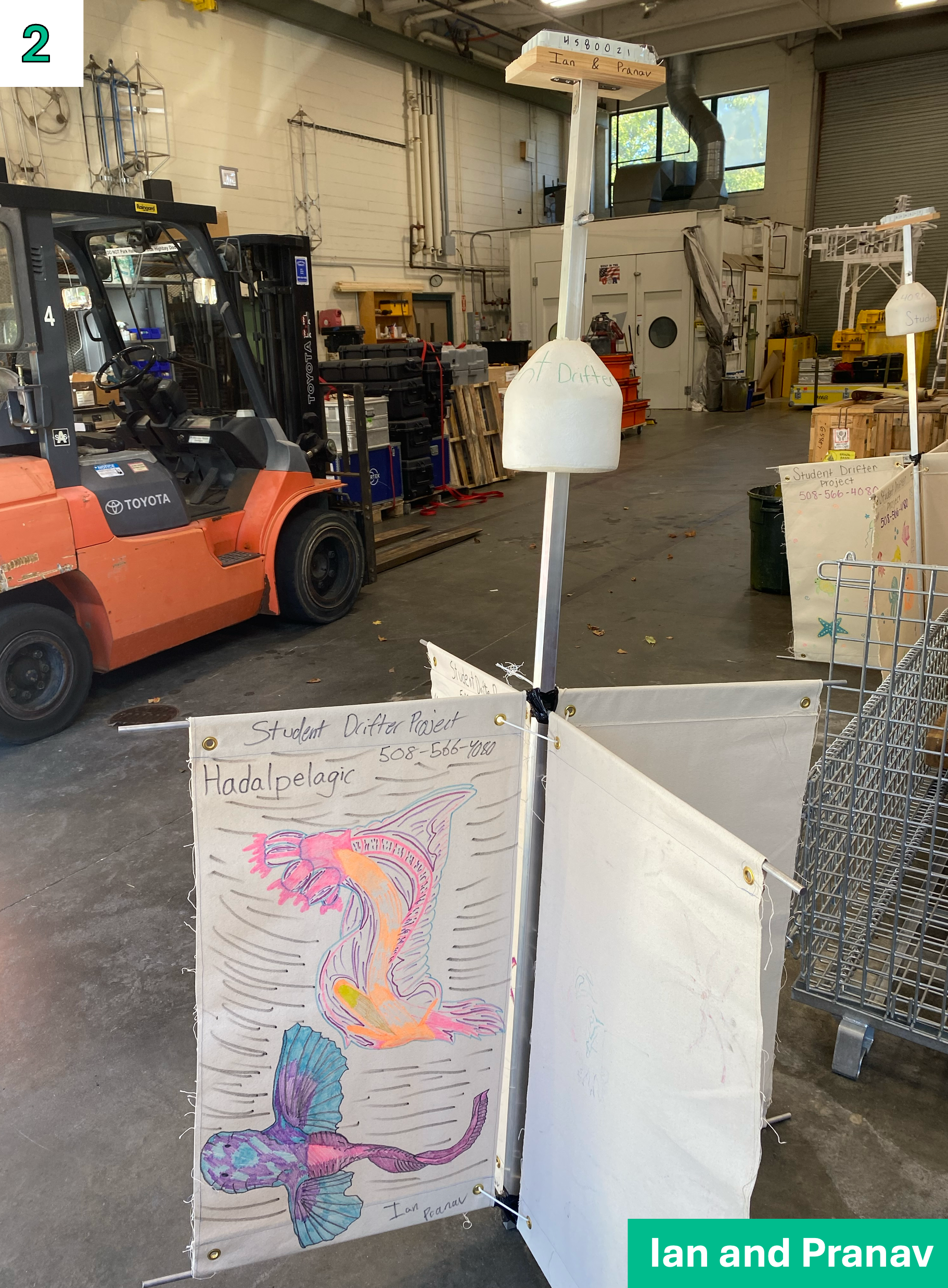
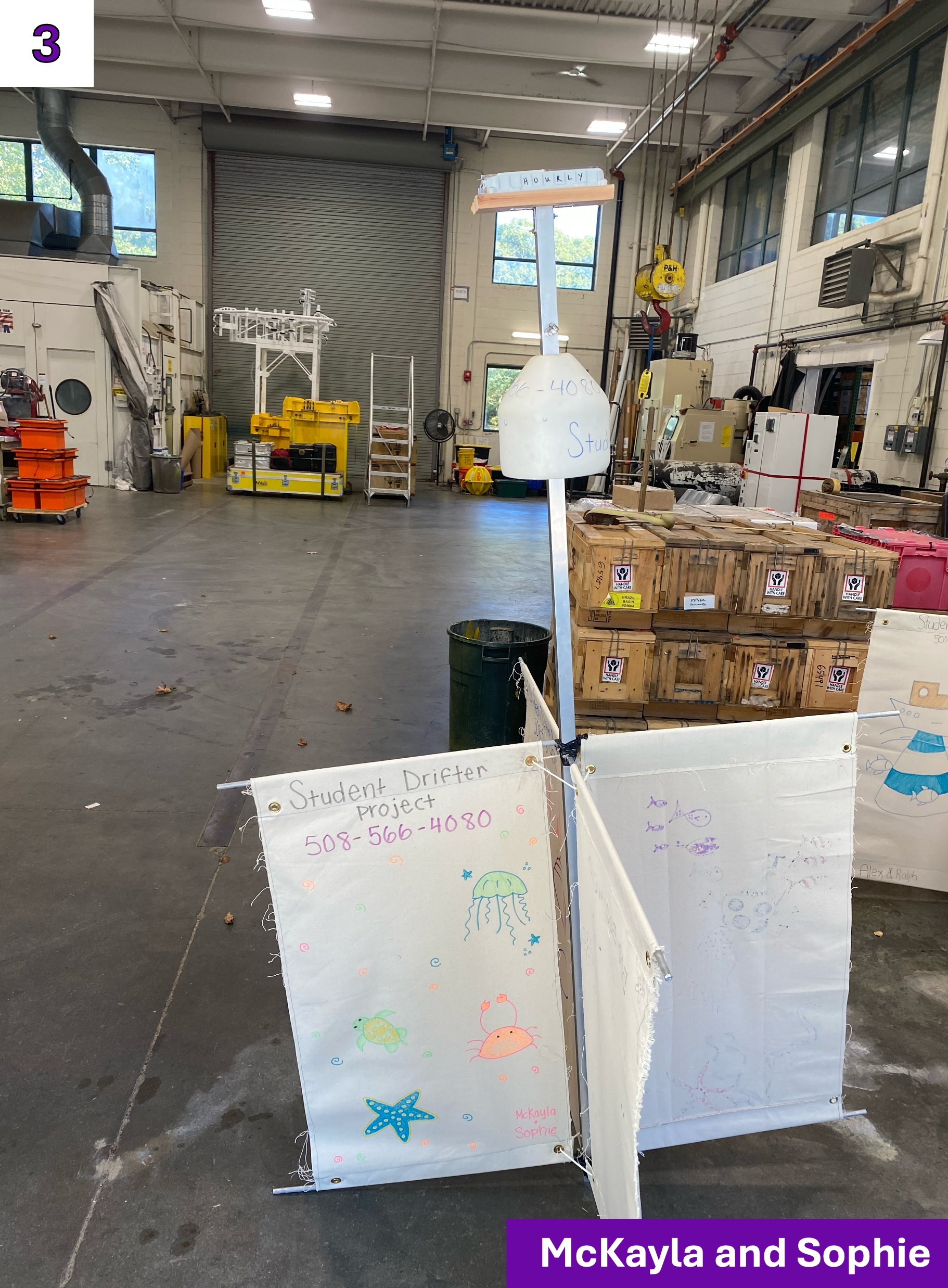
Here are the three drifters we launched, built by McKayla/Sophie, Ian/Pranav, and Alex/Ralph. Their color and number correspond to the site map below.

Preparing for deployment
In order to obtain easily comparable data over multiple seasons and now years, we decided to deploy the drifters at the same locations as the 2025 releases. These locations are shown on the map below. If you are curious about why we selected these locations, see our previous blog post!

For ease of transport and storage, we waited to attach the sails to the drifters until they were selected to be deployed. The day before the drifters had to be on the boat, I went to the WHOI high bay to retrieve the drifters from storage and prepare them for deployment. After locating the drifters, I attached the sails by sliding the spars into the top and bottom of the sails and then tying the four sails together for extra security. A huge thanks to WHOI Sea Grant communicator Stephanie Murphy who helped me attach the sails! Afterwards, I took the three drifters outside to check that the GPS transmitters were working. The GPS units are solar powered and need to be charged in the sun before they begin to ping their location. Once I determined that all the units were working, the drifters were ready to be loaded onto the boat and deployed!


Deployment
Now that our 2026 drifter deployments are underway, I am very excited to see where the drifters end up and how well they agree with the October deployment from last year! If you want to track the drifters along with me, go to https://studentdrifters.org/tracks/drift_osteam_2026_4.html for hourly position updates. After a week or two I will update the blog page with a new post about where the drifters are and where they beached (if any do).