Search results for: cheap%20airline%20tickets%20to%20arizona%20for%2017%20year%20olds%20phone%20number%201-800-299-7264
The Swimming Behavior of Larval Oysters
Jeanette Wheeler (right) and WHOI Summer Student Fellow Elaine Luo used a turbulence tank to study the swimming behavior of oyster larvae. Photo by Tom Kleindinst, WHOI Oysters are a species of profound economic and ecological importance, as they represent a hundred million dollar per year aquaculture and fishing industry in the U.S. and are…
Read MoreStudy Provides Measurement of Nitrogen Removal by Local Shellfish
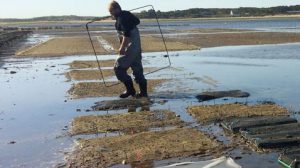
Towns along Cape Cod and the Islands are looking to shellfish not only as tasty culinary treats, but also for help cleaning up waters degraded by excess nitrogen in the region. While nitrogen is essential for all plants and animals, too much nitrogen in ponds and waterways—often caused by fertilizer runoff and septic tanks—can fuel…
Read MoreThe Swimming Behavior of Larval Oysters
March 2018 — Oysters are a species of profound economic and ecological importance, as they represent a hundred million dollar per year aquaculture and fishing industry in the U.S. and are a foundational reef-building species providing refuge to other marine plants and animals, in addition to stabilizing shorelines against storm surges and filtering pollution out…
Read MoreRegister Now for Shellfish Farming Course
Woods Hole Sea Grant and the Cape Cod Cooperative Extension Marine Program are offering a Fundamentals of Shellfish Farming class starting on Thursday, March 22, 2018. The class will meet every Thursday night from 6:00-8:00 p.m. through May 10, 2018, and will be held at the Barnstable County Complex – Harborview Conference Room on Route…
Read MoreReduce, Restore, Recover: Little Pond ecosystem’s response to sewering
Reduce, Restore, Recover: Little Pond ecosystem’s response to sewering Principal Investigators Ken Foreman, Marine Biological Laboratory Ketil Koop-Jackobson, Marine Biological Laboratory Matt Long, Woods Hole Oceanographic Institution Abstract Over the last 70 years, Cape Cod has seen rapid population growth and minimal investment in wastewater infrastructure. This has added significant amounts of nitrogen to the…
Read MoreShucked Oyster Rapid Response Program
RAPID RESPONSE: Assisting Shellfish Growers Impacted by COVID-19 Making In-roads Toward a Shucked Oyster Market in Massachusetts Overview With the arrival of COVID-19 and the social distancing measures to mitigate its spread including the closure of restaurants, sales of oysters have plummeted. With little access to their traditional markets, shellfish aquaculture businesses and the related…
Read MoreSurf Clams
Surf Clams In the marketplace, one-year-old surf clams are known as “New England Butter Clams” – a relatively new product on the market. Farming New England Butter Clams means they can be harvested at a size in which they are tender, buttery and sweet – as well as easy and versatile to prepare. This results…
Read MoreTeacher Workshop: October, 29 2019-Coastal Wetlands
Carbon Cycling in Coastal Wetlands Presenters: Dr. Anne Giblin, Marine Biological Laboratory (MBL) Senior Scientist – Rising Seas and the Fate of Coastal Salt Marshes Dr. Meagan Eagle Gonneea, U.S. Geological Survey Research Scientist – Blue Carbon in Our Backyard: Coastal Wetlands, Climate, Management, and Markets Date: October 2019 Lesson Plans…
Read MoreSeptember 2019 Newsletter
Coastal Impacts Woods Hole Sea Grant Newsletter September 2019 SEPTEMBER 2019 CONTENTS How Do Sharks Respond to Internal Waves in the Ocean? Inspiring Girls in Science Knauss Profile: Amalia Aruda Almada Coastal Conference Series Spotlights Nantucket Sea Grant Participates in First Northeast Water Quality Monitoring Blitz Upcoming Workshop for Educators Knauss Fellowship Opportunity Now Open!…
Read MoreCommunity Rating System
Community Rating System (CRS) Flooding and insurance costs have become a more prominent issue in the past several years as sea levels rise, precipitation patterns shift, and Congress reorganizes the National Flood Insurance Program. In 2015, the Community Rating System (CRS) and Floodplain Coordinator position was created to assist communities with participation in the CRS…
Read More