Search results for: student%20cheap%20airline%20tickets%20phone%20number%201-800-299-7264
Food Webs
Food Webs Background Food webs are dynamic and complex. Species in each trophic or feeding level rely on their prey base and in turn are critically important to the organisms that feed on them. Energy travels through the food web and steadily decreases with each trophic level it passes through as some is used for…
Read More2020 Program Development Projects
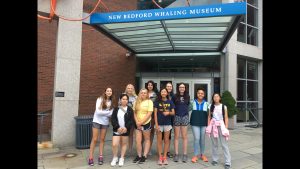
Program Development Projects 2024 Projects John Logan, MA Division of Marine Fisheries: Using eDNA to assess the importance of eelgrass as juvenile winter flounder habitat 2023 Projects Donna Dimarchopoulou, Mohammed Hashim, Chloe Dean, Adam Subhas, WHOI: Elevator pitches for labs: Building hands-on tools to communicate lab-based research. Naomi Steckman, Beyond the Bounds: Beyond the Bounds…
Read MorePreserving Our Homelands Camp Comes to WHOI
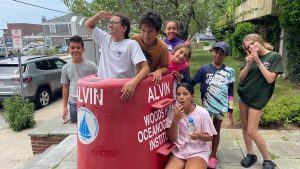
Most science educators will tell you, if you want to get kids excited about science, you have to actually do science. Last summer WHOI Sea Grant had the opportunity to participate in the annual “Preserving Our Homelands” (POH) camp, an interactive summer science camp for Mashpee Wampanoag Tribal middle schoolers. Through activities and outings, including visits…
Read MoreTeacher Workshop: October, 29 2019-Coastal Wetlands
Carbon Cycling in Coastal Wetlands Presenters: Dr. Anne Giblin, Marine Biological Laboratory (MBL) Senior Scientist – Rising Seas and the Fate of Coastal Salt Marshes Dr. Meagan Eagle Gonneea, U.S. Geological Survey Research Scientist – Blue Carbon in Our Backyard: Coastal Wetlands, Climate, Management, and Markets Date: October 2019 Lesson Plans…
Read MoreTeacher Workshop: December, 3 2021-Invasive Species
Marine Invaders: Green crabs and other local invasive species Presenters: Dr. Carolyn Tepolt, WHOI Biology Department – Invasive Species on Our Shores, Presentation Slides Dan Martino, co-owner, Cottage City Oysters – Invasive Species in Aquaculture, Presentation Slides Date: December 2021 Lesson Plans and Classroom Activities NOAA Live! 4 Kids recorded webinars: These…
Read More1990-2000 Environmental Technologies Summary
Snapshot WHOI Sea Grant’s investment in environmental technologies has resulted in the development of new tools for analyzing and interpreting the effects of toxic chemicals on the reproduction, development, and disease defenses in marine animals and for detecting the presence of harmful algal species before bloom conditions occur. Background Coastal ecosystems in southeastern Massachusetts are…
Read MoreSalmon
Salmon Background Historically, Atlantic salmon were plentiful in the Northeast U.S. However, they are currently at 1-5% of those historical estimates and consequently are listed under the Endangered Species Act (ESA). As anadromous fish, Atlantic salmon face many challenges during their initial hatching and two years in freshwater nursery rivers; journey through the estuaries and…
Read More1990-2000 Fisheries & Aquaculture Overview
Snapshot WHOI Sea Grant’s investment in fisheries and aquaculture has resulted in the development of better management practices and policies for shellfish harvest and shellfish aquaculture and better understanding of the life history and environmental requirements of commercially important species of fish and shellfish. Background In Massachusetts, the fishing and aquaculture industries are tightly entwined…
Read More1990-2000 – Estuarine & Coastal Processes
Snapshot WHOI Sea Grant’s investment in estuarine and coastal processes has resulted in better understanding of the physical, chemical, geological, and biological processes of coastal habitats. This information has been applied to critical management decisions in the coastal zone including water quality issues, shoreline erosion and storm damage, and food web dynamics. Background Estuarine and…
Read MoreFrom the Director: Knauss Fellowship Opportunity
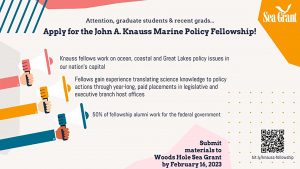
The application period has opened for the 2024 Knauss Marine Policy Fellowship program, which provides unique professional experiences for graduate students interested in national ocean policy. Since 1979, Sea Grant has supported over 1,000 Knauss Marine Policy Fellows, pairing graduate students in marine sciences with host offices in the legislative or executive branches of government.…
Read More