River Herring
This program is a collaboration between the NOAA Northeast Fisheries Science Center and WHOI Sea Grant.
Background
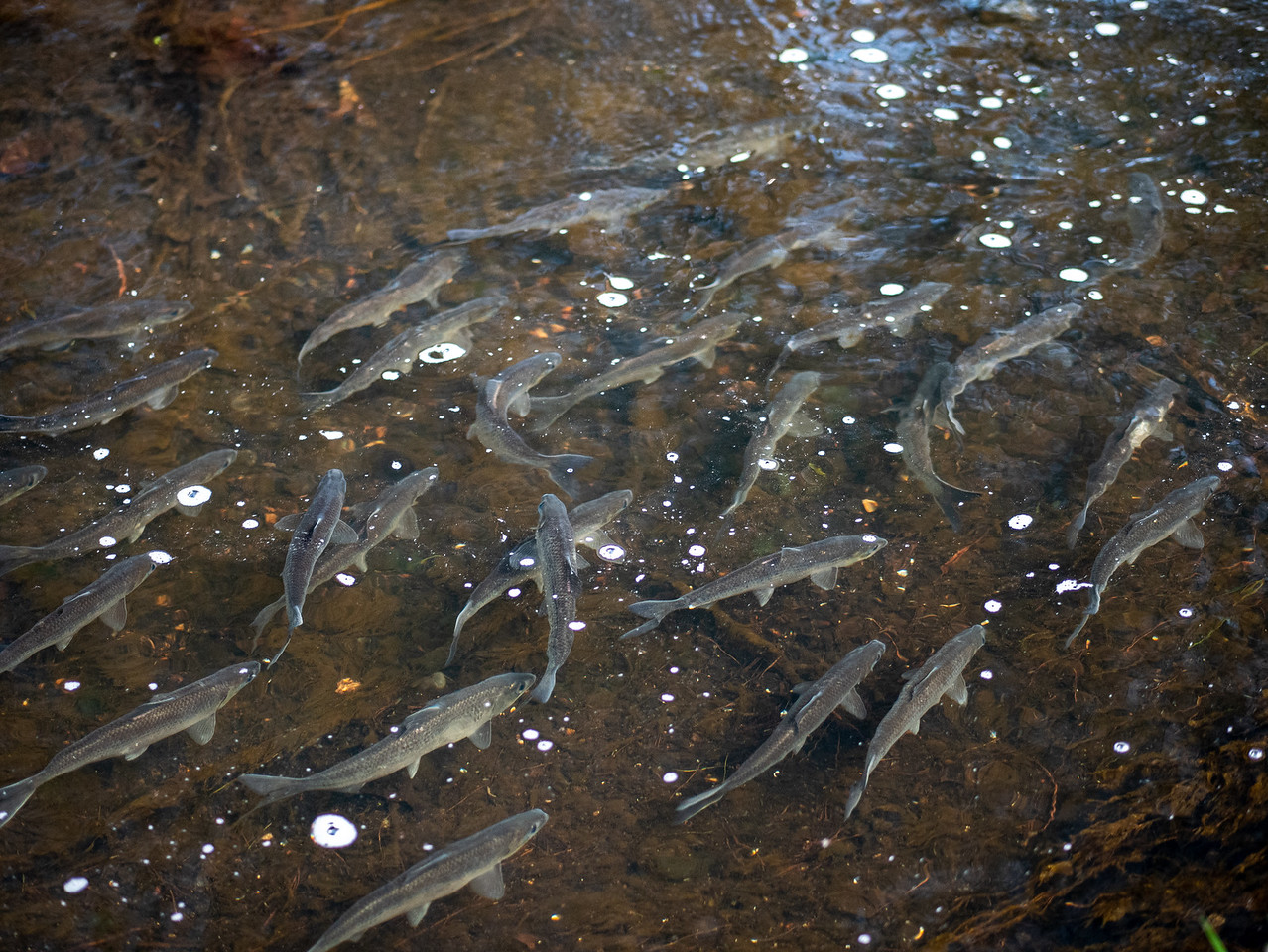
River herring (alewife or blueback herring) are migratory fish that range along the East Coast from Florida to Maine. They are diadromous fish meaning they spend part of their lives in saltwater and part of their lives in freshwater. There are 13 diadromous species in Massachusetts, including river herring, American eels, Atlantic sturgeon, American shad and more. Each spring, millions of river herring migrate to Massachusetts rivers returning to where they were born to lay their eggs. The young fish will stay in the freshwater until they are mature enough to migrate to estuaries (where the freshwater meets the saltwater). Eventually, adults will head out into the saltwater to eat and get bigger.
River herring are a key species within the food chain for other recreational and commercial fish, such as cod, haddock and striped bass. Their declining numbers due to predation, bycatch, and other human-made obstacles have been observed in recent years. Herring themselves feed on zooplankton, small fish, and the eggs and larvae of other species.
Herring are not jumpers, so obstacles such as dams and culverts can cause significant problems in their ability to successfully reach their spawning grounds. Fish ladders are often not that effective at offering the fish an alternative to getting by the dams. They are better than nothing - but sometimes the fish have a hard time finding the entrance, or swimming up the ladder if the water flows are too fast or if there are flood or drought conditions. They are most successful when they are traveling along streams and rivers that have overhanging vegetation that provides shade and protection from predators. Rocky bottoms allow for greater camouflage with their darker colors. Herring are schooling fish and will move together in groups as they travel up and down the rivers. Out in the ocean, they also maintain their numbers as a way to provide safety.
In the third grade activity, you will explore the different stages of a herring’s life, and what they might be doing during different times of the year as they grow and mature, and eventually return to their birth places to spawn their own young.
In the seventh grade activity, you will follow the path of your fish as it journeys up Town Brook to its spawning grounds. You will be given data for one fish in 2018 when the dam was still in place and one fish in 2019 after the dam was removed. You will track your fish and then answer questions about its journey and discuss the ecological implications.
Lesson Plans and Activity Sheets/Handouts
Grade 3 - River herring life cycle
Grades 7 - Telemetry
River Herring Telemetry Worksheet
Materials for 2018 - Dam in place
Materials from 2019 - Dam removed
This lesson meets the following NGSS/Mass STE Standards, and Ocean Literacy Principles
- Grades 3:
- NGSS - 3-LS1-1. Develop models to describe that organisms have unique and diverse life cycles but all have in common birth, growth, reproduction, and death.
- Mass STE -3-LS1-1. Use simple graphical representations to show that different types of organisms have unique and diverse life cycles. Describe that all organisms have birth, growth, reproduction, and death in common but there are a variety of ways in which these happen.
- Mass STE - 3-LS4-4. Analyze and interpret given data about changes in a habitat and describe how the changes may affect the ability of organisms that live in that habitat to survive and reproduce.
- Ocean Literacy Principle 5: The ocean supports a great diversity of life and ecosystems.
- Ocean Literacy Principle 6: The ocean and humans are inextricably interconnected.
- Grades 7:
- NGSS - MS-LS2-4. Construct an argument supported by empirical evidence that changes to physical or biological components of an ecosystem affect populations.
- Mass STE - MS-LS2-4. Analyze data to provide evidence that disruptions (natural or human-made) to any physical or biological component of an ecosystem can lead to shifts in all its populations.
- Ocean Literacy Principle 5: The ocean supports a great diversity of life and ecosystems.
- Ocean Literacy Principle 6: The ocean and humans are inextricably interconnected.
Additional Resources
- River Rush Game: This is a fun board game where you are a river herring and you have to find your way back to where you were born. Designed by Mass Division of Marine Fisheries.
- NOAALive4Kids Webinar on River Herring: This webinar is titled, "Swimming Upstream with River Herring" and was made for students.
- Survive the Sound: This nonprofit has Pacific Northwest salmon activities, lessons, games, and more!
- Help count the river herring:
-Mystic River, Massachusetts Herring Counter, https://www.mysticherring.org/video#/
–Town Brook, Plymouth Massachusetts Herring Counter, https://www.plymouthriverherring.org/
- An Incredible Journey: NOAA Fisheries prepared these ten lesson plans exploring the environmental, cultural, and economic importance of salmon. Designed for grades 4-5.
- Fish Need to Move Lesson Plan: This is a grade 5-8 classroom lesson on designing fish friendly culverts and bridges. Designed by US Fish and Wildlife.
- Watch Live Fish Cameras:
–Herring Creek on Martha’s Vineyard, https://wampanoagtribe-nsn.gov/naturalresourcedepartment
–Town Brook, Plymouth Massachusetts Herring Counter, https://www.plymouthriverherring.org/
This program is a collaboration between the NOAA Northeast Fisheries Science Center and WHOI Sea Grant.
Scientist Spotlight
 Abigail Archer
Fisheries and Aquaculture Specialist
WHOI Sea Grant and Cape Cod Cooperative Extension
Abigail Archer is a marine scientist who works with town herring wardens and state fisheries biologists to figure out ways to observe migrating river herring and determine ways to make the route faster and safer for them.