Search results for: Call%201800-299-7264%20To%20Book%20%20United%20Airlines%20Basic%20Economy
The Kelp Forests of New England
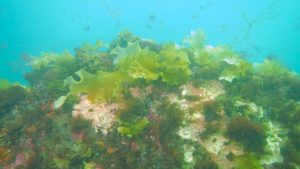
New England isn’t known for its kelp forests the way California and other parts of the world are. But the truth is, below the surface of both inshore and offshore waters throughout New England, especially in areas that have rocky bottoms and a lot of wave action, there are “lush rolling meadows of kelp,” according…
Read MoreJune 2018 Newsletter
Coastal Impacts Woods Hole Sea Grant Newsletter June 2018 From the Director With the summer upon us, many locals and frequent visitors to the Cape will be returning to their favorite beaches to find them quite different than last year. Perhaps there are fewer parking spaces or the beach access has been relocated. The past…
Read MoreThreat to the Freedom of Scientific Research in the Deep Sea?
Threat to the Freedom of Scientific Research in the Deep Sea? Ross, D.A. 1978 WHOI-R-78-002
Read MoreThe Ah Receptor: Comparative Biochemistry and Possible Role as a Biomarker of Susceptibility to PHAH
The Ah Receptor: Comparative Biochemistry and Possible Role as a Biomarker of Susceptibility to PHAH Hahn, M.E., B.A. Jensen, and E.-Y. Kim In: Endocrine Disruptors in the Marine Environment: Impacts on Marine Wildlife and Human Health. Proceedings of the Atlantic Coast Contaminants Workshop, pp. 120-126, 2000 WHOI-R-00-012 Halogenated aromatic hydrocarbons (HAHs) are ubiquitous contaminants of…
Read MoreWHOI-R-07-001 Valentine P.C. Ecological Ob
WHOI-R-07-001 Valentine P.C. Ecological Ob
Read MoreWicked Good Education: National Marine Educators Come to Boston
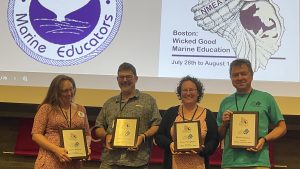
WHOI Sea Grant Education Specialist Grace Simpkins has had a busy year. When the National Marine Educators Association decided to hold its annual meeting in Boston in 2024, Grace and her colleagues on the board of the Massachusetts chapter sprang into action, planning the week-long meeting that brings together teachers and informal educators from across…
Read MoreWHOI-X-83-002 Burke, William J. An Impr
WHOI-X-83-002 Burke, William J. An Impr
Read MoreOcean Encounters
This spring, WHOI Sea Grant’s Floodplain manager Shannon Hulst was a featured panelist in WHOI’s Ocean Encounters series. The live Zoom conversation called “Rising Seas, Resilient Coasts,” which reached an audience of 2000 viewers, also included Chris Piecuch, a WHOI sea level scientist and Hannah Wagner, the resilience manager for the City of Boston in…
Read MoreMicroplastics in the Marine Environment
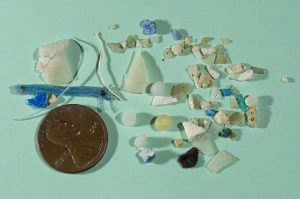
In 2020, recognizing the growing problem of marine debris in the environment, Woods Hole Sea Grant funded two new research projects that aim to better understand the sources, transport and uptake of microplastics by certain wild and cultured sea food. “Microplastics have many sources, shapes and sizes in the marine environment yet we know very…
Read MoreThe Rising Tide of Plastic Pollution: Sustainable Business Solutions Summit
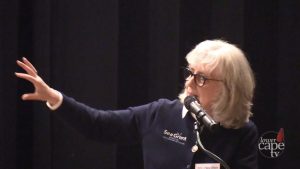
The transition to sustainable serviceware can be complicated for businesses. This month, WHOI Sea Grant communicator Stephanie Murphy spoke about these challenges at the 5th Annual Take Care Cape Cod summit. This year’s meeting was called “The Rising Tide of Plastic Pollution: Sustainable Business Solutions.”
Read More