Search results for: cheap%20airline%20ticket%20atlanta%20to%20columbus%20ohio%20november%2018%20phone%20number%201-800-299-7264
Study Provides Measurement of Nitrogen Removal by Local Shellfish
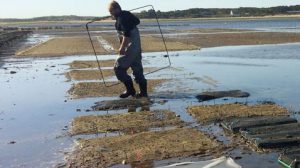
Towns along Cape Cod and the Islands are looking to shellfish not only as tasty culinary treats, but also for help cleaning up waters degraded by excess nitrogen in the region. While nitrogen is essential for all plants and animals, too much nitrogen in ponds and waterways—often caused by fertilizer runoff and septic tanks—can fuel…
Read MoreBay State Aquaculture Projects Get Green Light from National Sea Grant Program
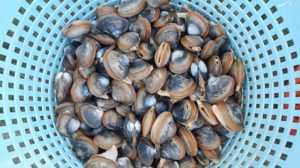
Two new grants to the Woods Hole Sea Grant program totaling more than $650,000 will support research aimed at expanding aquaculture production in Massachusetts. The projects won funding as part of a national strategic investment in aquaculture by the NOAA Sea Grant Program. “The United States is one of the world’s leading seafood consumers, yet…
Read MoreLesson Plans and Classroom Visits
Lesson Plans and Classroom Visits WHOI Sea Grant has developed a variety of classroom activities and lesson plans. The majority are within the COAST Program and all the classroom visits are based on COAST lessons. Visit the homepage for each lesson group to find out more. Coasts, Oceans, and Stewardship Program (COAST) WHOI Sea Grant…
Read MoreCOVID-19 Resources
COVID 19 RESOURCES We are pleased to offer the following resources to assist our stakeholders, developed during the pandemic but still relevant to a great deal as we transition back to a “new normal.” Woods Hole Sea Grant staff are working a hybrid of remote and in-office schedules but as always are available to assist you…
Read MoreJuly 2019 Newsletter
Coastal Impacts Woods Hole Sea Grant Newsletter July 2019 From the Director This time of year is an unusually busy, but productive time for our program. As our new COAST program classroom visits are winding down, the shellfish research farms are in full swing and the herring runs are active. Our Islands Coastal Conference, this…
Read MoreJanuary 2019 Newsletter
Coastal Impacts Woods Hole Sea Grant Newsletter January 2019 From the Director You may be surprised to learn that nearly 90 percent of the seafood we consume here in the United States comes from abroad, and most of these imports are farmed products. As such, Sea Grant and other federal programs are promoting research and…
Read MoreTeacher-at-Sea Alumni Connect with Woods Hole Sea Grant
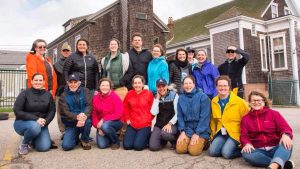
For educators who want to teach young people about ocean science, the opportunity to work with world-renowned scientists and experience life at sea aboard a research vessel is a dream come true. The NOAA Teacher at Sea Program gives teachers that opportunity, sending select teachers on research expeditions that last anywhere from two weeks to…
Read MoreFunded Projects by Year
Funded Projects 2010 – Present 2026-2027 Collapse Jennifer Bowen of Northeastern University, and Wayne Castonguay of MA Division of Marine Fisheries Keeping Clams Clean: Tracking microbial contamination of clam flats Sarah Donelan of University of Massachusetts Dartmouth Winter is Changing: Enhancing oyster overwintering practices Brian Cheng and Lisa Komoroske of University of Massachusetts Amherst Just…
Read MoreHalogenated Marine Natural Products: A Potential Risk to Human Health?
Halogenated Marine Natural Products: A Potential Risk to Human Health? Principal Investigator Mark Hahn, Woods Hole Oceanographic Institution Co-Principal Investigator Chris Reddy, Woods Hole Oceanographic Institution Summary The team of biologists and marine chemists will examine the potential risk to human health posed by halogenated marine natural products (HNPs) in seafood. Some HNPs have been…
Read MoreCytochrome P4501A Induction and Porphyrin Accumulation in PLHC-1 Fish Cells Exposed to Sediment and Oil Shale Extracts
Cytochrome P4501A Induction and Porphyrin Accumulation in PLHC-1 Fish Cells Exposed to Sediment and Oil Shale Extracts Huuskonen, S.E., A. Tuvikene, M. Trapido, K. Fent, and M.E. Hahn Arch. Environ. Contam. Toxicol., Vol. 138, pp. 59-69, 2000 WHOI-R-00-003
Read More